A vehicle may look repaired after an accident, but cosmetic work alone does not confirm that its structure is safe. Even a relatively minor impact can shift a chassis or frame by a few millimetres—enough to affect steering, tyre wear, suspension geometry, and the way the vehicle responds in a future collision.
That is where CCM chassis repair becomes essential.
At Drive Zone Auto, we understand that structural collision work requires more than visual inspection. Computerized Chassis Measurement (CCM) provides a precise way to inspect a vehicle’s underlying structure, identify hidden misalignment, and guide a professional repair process.
What is CCM (Computerized Chassis Measurement) Repair?
In this guide, we explain what CCM chassis repair is, how computerized measuring technology works, and when you should seek chassis repair in Sharjah.
What Does CCM Mean in Chassis Repair?
CCM or Computerized Chassis Measurement is a digital diagnostic process used to assess the dimensions and alignment of a vehicle’s chassis after an accident, impact, or suspected structural damage.
Rather than relying only on visual checks, technicians use a computerized measuring system to compare key vehicle reference points against manufacturer specifications. The system can identify whether parts of the vehicle structure have moved, twisted, dropped, or shifted out of position.
A CCM inspection can assess areas such as:
Front and rear frame rails Suspension mounting points Subframe locations Shock towers Crossmembers Floor-pan reference points Wheelbase and symmetry measurements Structural alignment in length, width, and height
This gives technicians an accurate picture of the vehicle’s condition before repairs begin.
Why Chassis Alignment Matters After a Collision
The chassis is the vehicle’s structural foundation. It supports major mechanical components and helps maintain correct wheel alignment, suspension operation, and overall driving stability.
When a chassis is bent or misaligned, drivers may notice problems such as:
- The car pulling to one side
- An off-centre steering wheel
- Uneven or unusually fast tyre wear
- Vibration while driving
- Difficulty maintaining a straight line
- Doors, bonnet, or boot not closing correctly
- Gaps between body panels
- Suspension or steering components wearing prematurely
Not every problem is visible from outside the vehicle. A car can have a clean-looking exterior while its structural points remain out of specification. That is why a proper computerized chassis measurement is valuable after a collision.
How Computerized Chassis Measurement Works
During a CCM inspection, the vehicle is placed on a secure chassis alignment bench or measuring platform. The technician then uses electronic measuring equipment, sensors, targets, or a digital measuring arm to record the position of specific points on the vehicle.
The system compares those readings with the factory dimensions for that make and model.
The process usually involves four key stages:
- Vehicle setup
The vehicle is positioned securely so measurements can be taken accurately and consistently. - Digital structural inspection
The computerized system checks important chassis and suspension reference points in three dimensions. - Comparison with factory data
Software compares the vehicle’s actual measurements with the original manufacturer specifications. - Repair planning and verification
If structural damage is found, the data helps guide chassis straightening. A final measurement confirms whether the repaired areas are within acceptable tolerance.
This approach is more precise than relying on visual judgement alone and helps ensure collision repairs address the cause of the problem—not only the visible damage.
What Is the Car-O-Liner System?
A Car-O-Liner system is advanced equipment commonly used in professional collision repair facilities for chassis measuring, frame straightening, and structural alignment.
Depending on the setup, a Car-O-Liner system may combine:
- A heavy-duty chassis repair bench
- Electronic or computerized measuring technology
- Vehicle-specific repair data
- Hydraulic pulling and straightening equipment
- Real-time alignment monitoring software
The vehicle is secured to the repair bench, allowing technicians to apply controlled pulling force to damaged structural areas. Throughout the process, measurements can be monitored so adjustments are based on data rather than estimates.
For modern vehicles with engineered crumple zones, high-strength materials, and complex suspension geometry, this accuracy is especially important.
How Does CCM Chassis Repair Work?
Once the computerized inspection identifies structural damage, the repair process can begin. While each vehicle and accident is different, professional CCM chassis repair generally follows this sequence.
1. Initial Damage Assessment
The technician checks the visible collision damage and performs a computerized chassis measurement. This identifies which structural points are outside the manufacturer’s specified dimensions.
The initial report is important because it shows the extent of the damage and helps determine whether straightening, part replacement, or additional inspection is needed.
2. Vehicle Securing and Positioning
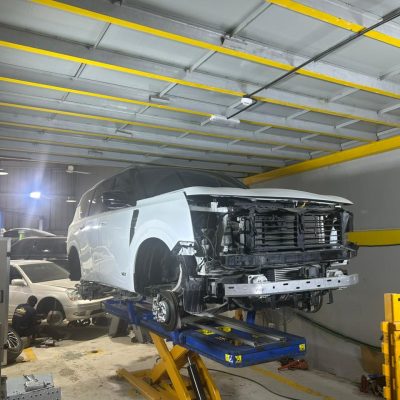
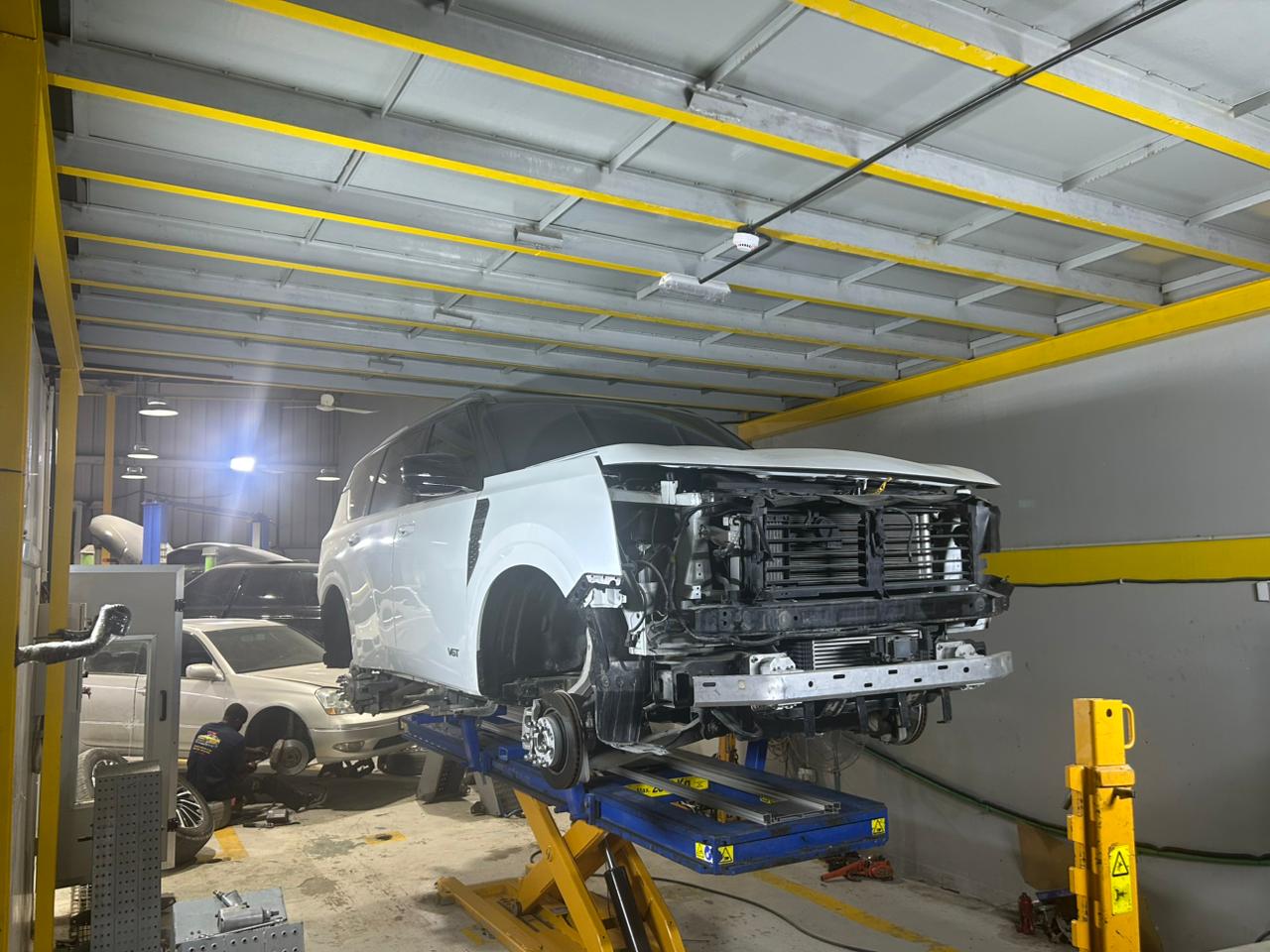
The car is mounted and secured to a chassis repair bench. A stable setup is necessary because the chassis must remain fixed while controlled force is applied to the damaged area.
3. Controlled Frame Straightening
Hydraulic pulling equipment is attached to approved structural points. Technicians then use gradual, carefully directed force to bring the affected section back toward its correct position.
This may involve correcting:
- A bent frame rail
- A shifted suspension mounting point
- A twisted front or rear section
- A distorted crossmember
- An impact-damaged subframe area
Repairs are carried out progressively. The goal is not simply to pull the metal until it “looks straight,” but to restore the vehicle according to its structural measurements.
4. Continuous Measurement
One major advantage of computerized chassis repair is the ability to check alignment during the straightening process. Technicians can measure critical points repeatedly and make small, targeted adjustments as necessary.
This helps avoid under-correction or over-correction.
5. Final Verification
After structural repairs are complete, the chassis is measured again. The final readings should fall within the vehicle manufacturer’s permitted tolerances.
A final check may also include wheel alignment, suspension inspection, steering checks, and a road test where appropriate.
CCM Chassis Repair vs. Wheel Alignment: What Is the Difference?
Many drivers confuse wheel alignment with chassis alignment, but they are not the same service.
Wheel alignment focuses on wheel angles, including camber, caster, and toe. It helps tyres wear evenly and allows the car to track straight.
Chassis repair, on the other hand, addresses the vehicle’s structural geometry. If a frame rail, subframe, or suspension mounting point is bent, a standard wheel alignment may not fully solve the issue.
In some cases, a vehicle may repeatedly go out of wheel alignment because the underlying chassis has shifted. Computerized chassis measurement helps identify whether structural damage is the real cause.
When Should You Get Chassis Repair in Sharjah?
You should consider a professional chassis inspection after:
- A front-end, rear-end, or side-impact collision
- Hitting a kerb, divider, pothole, or road obstacle at speed
- Airbag deployment
- A failed alignment that keeps returning
- Noticeable steering pull or vibration after an accident
- Uneven tyre wear after collision repairs
- Visible underbody, suspension, or frame damage
- Difficulty closing doors, bonnet, or boot after impact
- Purchasing a used vehicle with accident history
Even if your car drives normally after an accident, a computerized inspection can reveal subtle structural issues that may otherwise go unnoticed.
Benefits of Professional CCM Chassis Repair
Choosing a workshop equipped for computerized chassis measurement provides important benefits:
- Improved accuracy: Digital measurements identify structural deviations that may not be visible.
- Better repair planning: Technicians can focus on the specific areas that require correction.
- Safer handling: Correct structural geometry supports proper steering and suspension performance.
- Reduced tyre wear: Restoring chassis and suspension mounting points helps prevent alignment-related tyre damage.
- Protection of vehicle value: Proper collision repairs can help maintain the vehicle’s performance and resale condition.
- Documented results: Measurement reports provide clear evidence of the vehicle’s before-and-after structural condition.
Why Choose Drive Zone Auto for Sharjah Collision Repair?
After an accident, it is important to choose a workshop that looks beyond dents, paintwork, and exterior panels. Structural repair requires accurate diagnosis, suitable equipment, and technicians who understand how vehicle geometry affects safety and performance.
At Drive Zone Auto, our approach to Sharjah collision repair focuses on identifying structural issues carefully and restoring alignment through professional chassis repair methods.
Whether your vehicle has experienced a major collision or you are concerned about steering pull, uneven tyres, or possible frame damage, a computerized assessment can provide the clarity you need.
Frequently Asked Questions
Is CCM chassis repair necessary after every accident?
Not every accident causes chassis damage, but a computerized inspection is recommended after significant impacts, suspension damage, airbag deployment, or any collision that affects how the vehicle drives or aligns.
Can a bent chassis be repaired?
In many cases, yes. Professional equipment can help restore repairable structural sections to manufacturer-specified dimensions. However, the appropriate repair depends on the location, severity, material type, and vehicle manufacturer repair procedures.
How long does chassis repair take?
The repair time depends on the extent of the damage, parts availability, bodywork requirements, and whether the vehicle needs additional suspension, steering, or paint repairs. A proper inspection is the best way to determine the expected timeframe.
Will chassis repair fix a car that pulls to one side?
It can, if the pull is caused by structural misalignment. However, pulling can also result from wheel alignment, tyre condition, brake drag, suspension wear, or steering issues. A full inspection is needed to identify the cause.
Is computerized chassis measurement more accurate than manual checking?
Computerized systems are designed to compare measured vehicle points with manufacturer data, making them highly useful for identifying structural deviations and verifying repairs.
Book a Computerized Chassis Inspection in Sharjah
If your car has been involved in an accident or does not feel right on the road, do not ignore the signs. Early inspection can help identify hidden frame or suspension-related problems before they lead to further tyre wear, handling concerns, or costly repairs.
Contact Drive Zone Auto to arrange a professional inspection and learn more about chassis repair in Sharjah, CCM chassis repair, and computerized structural alignment services.